Ninetta
The DecameronNinetta is a young woman of Marseilles whose secret love for Restagnone draws her and her sisters into a flight to Crete, then into a chain of betrayals and violence. Her story turns on the transformation of desire: she helps build a life in which love and wealth seem to promise freedom, but when Restagnone’s affection fades, her jealousy becomes murderous. Captured for his death, she is finally led away by Folco under false pretenses, and her fate remains unknown.
Identity and Family
Ninetta is one of three daughters of Narnald Cluada, a rich and widely trusted merchant of Marseilles. The two elder daughters, Ninetta and Maddalena, are twins and fifteen; their younger sister, Bertella, is fourteen. Their relatives are waiting for Narnald to return from Spain, where he has gone on business, before arranging their marriages. The sisters’ prospects are thus tied to their father’s return and their family’s decisions, while Ninetta already has a clandestine attachment of her own.
Restagnone, a young man of gentle birth but little means, loves Ninetta, and she loves him in return. For some time they enjoy this relationship without anyone knowing. Their secrecy matters to the plot: the escape Ninetta later helps plan is not an impulsive first encounter, but an attempt to turn a hidden affair into a shared life beyond the oversight of family and community.
The Plan to Leave Marseilles
The opportunity comes when Folco and Ughetto, two wealthy young men whose fathers have died, fall in love with Maddalena and Bertella. Ninetta tells Restagnone about the new suitors. He recognizes that their wealth could make his own escape possible and proposes that the three young men pool their resources, take the sisters with them, and settle somewhere they can live together. His proposal treats the lovers’ future as a joint undertaking, but it also makes Ninetta’s sisters and their father’s property part of a plan devised to serve his ambitions.
Restagnone persuades Folco and Ughetto by offering them the prospect of life with the women they love. He then brings the plan to Ninetta, who welcomes it: she wants to live with him without concealment and expects her sisters to follow her wishes. She agrees to help make the venture possible. The young men sell land and other possessions under the pretense of preparing for trade, buy a light brigantine, and equip it in secret.
Ninetta’s role is active rather than merely responsive. Knowing her sisters’ dispositions, she wins them over with gentle persuasion until they too are eager to go. On the appointed night, the three sisters open a large coffer belonging to their father and take a considerable quantity of money and jewels. They meet their lovers aboard the brigantine and put to sea. The group reaches Genoa the following evening, continues from port to port, and arrives at Crete before the eighth day. There the couples buy substantial estates near Candia, build comfortable houses, and live with servants, dogs, hawks, and horses. The escape succeeds in its immediate purpose: the lovers establish themselves at a distance from their former constraints, amid wealth and plenty.
Restagnone’s Betrayal and Ninetta’s Revenge
The prosperity does not preserve the original attachments. Once Restagnone can be with Ninetta whenever he wishes, without obstruction, he begins to tire of her. At an entertainment he sees a beautiful, high-born young woman of the country and turns his attention to her, courting her with lavish hospitality and gallantry. Ninetta learns of his pursuit and grows intensely jealous. She watches his movements closely and reproaches him, but her protests do not restore the relationship.
Instead, the story presents denial as intensifying Restagnone’s desire for the new woman. Whether or not he has succeeded in winning her, Ninetta comes to believe that he has. Her love for Restagnone changes into bitter hatred, and, blinded by anger, she decides to avenge the affront she thinks she has suffered by killing him. She approaches an elderly Greek woman known for compounding poisons and secures from her a deadly liquid with gifts and promises.
One evening, while Restagnone is heated and unsuspecting, Ninetta gives him the poisoned drink. The poison kills him before morning. Folco, Ughetto, and their respective lovers mourn Restagnone, as does Ninetta; they do not know that poison caused his death. The difference between public grief and concealed responsibility marks the decisive break in Ninetta’s story: the woman who helped make the group’s escape possible has now destroyed the man for whom she first undertook it.
Arrest, Deception, and an Unknown Fate
The truth emerges when the old woman is arrested for another offense and, under torture, confesses that she made the poison for Ninetta. The Duke of Crete acts without public announcement, surrounds Folco’s palace at night, and takes Ninetta prisoner. Without torturing her, he obtains her account of Restagnone’s death. The narrative reports the capture and confession but does not describe a trial or specify a punishment.
The following morning, Folco and Ughetto hear that Ninetta has been taken during the night. Believing the report, they are released and return to comfort Maddalena and Bertella over their sister’s apparent loss. Maddalena tries to keep Ninetta’s presence in the palace from Folco, but he discovers it. Because he has heard of the duke’s desire for Maddalena, he asks how her sister came to be there. Maddalena’s explanation does not satisfy him; after pressing her, he forces her to tell the truth.
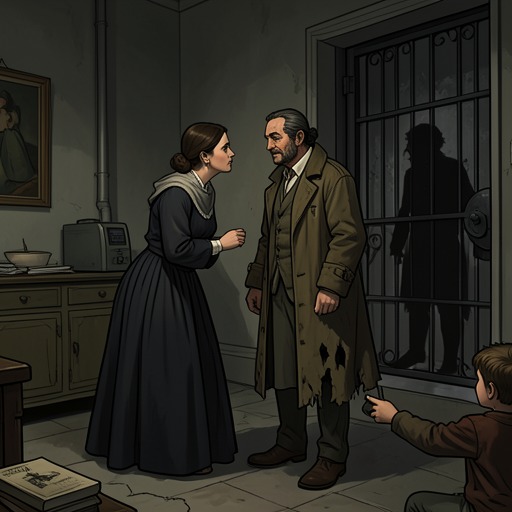
Folco responds by drawing his sword and killing Maddalena, despite her pleas for mercy. He then approaches Ninetta with a feigned cheerful manner and claims that they must leave at once to prevent her from falling again into the duke’s hands, presenting the escape as something Maddalena had arranged. Ninetta believes him. Afraid and eager to get away, she leaves with him at night without taking leave of her sister. They reach the shore with only the small amount of money Folco can gather and board a vessel. Their destination is never discovered.
Meanwhile, the murdered Maddalena is found, and people hostile to Ughetto report the death to the duke. The duke, who had loved Maddalena, seizes Ughetto and Bertella, who know nothing of Folco and Ninetta’s departure. He compels them to confess themselves guilty along with Folco. Facing death, they bribe their guards with money they had kept hidden for emergencies and escape by sea to Rhodes, leaving their possessions behind. They live there only a short time, in poverty and distress. Ninetta’s own later circumstances are not given; the account ends with Folco’s escape alongside her and the other fugitives’ ruined prospects.
Narrative Significance
Ninetta’s trajectory binds the story’s successive fortunes together. Her concealed love begins the movement away from Marseilles; her persuasion helps bring all three sisters into the plan; and her jealous revenge breaks the community the lovers had built in Crete. The early escape depends on pooled wealth, secrecy, and cooperation, but prosperity cannot secure fidelity or trust. Restagnone’s new desire produces Ninetta’s rage, while the consequences of her crime spread beyond the two of them to Maddalena, Folco, Ughetto, and Bertella.
The ending gives Ninetta no clear resolution or stated judgment. She survives the duke’s custody only in the sense that Folco carries her away, and she does so believing a false account of why they must flee. The story’s final uncertainty is pointed: the group that began by choosing a destination and furnishing a life of abundance ends scattered, impoverished, dead, or untraceable. Ninetta’s part in that reversal is both consequential and compromised—she acts decisively to pursue love and later to avenge its loss, but the escape that once seemed to promise freedom leaves her once more dependent on another person’s deception.